Norwegian version of this page

INCONTEXT Investigating Contested Theories on Extreme-Right Terrorism

Duration
–
Project type
Collaboration
Affiliation
Department of Preventive Policing, Intelligence and Police Science

This project investigates how political violence is shaped by shifting political climates.

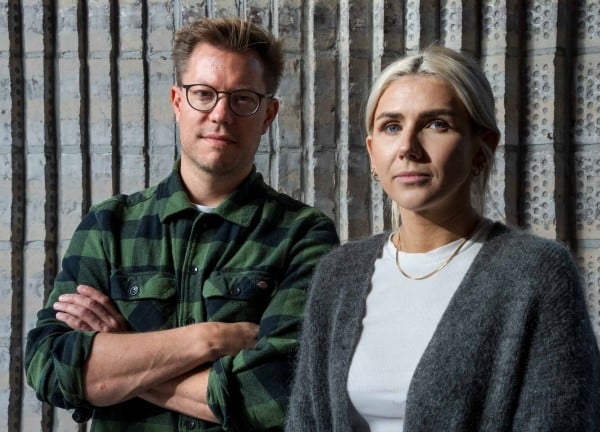
The photo shows researchers involved in the project, a man and a woman.

From the left: Jacob Ravndal and Charlotte Tandberg

The INCONTEXT project investigates how political violence is shaped by shifting political climates. Donald Trump’s performance as President of the United States gave momentum to two of the most contested theories on the causes of extreme-right terrorism and violence: representation and repression. Representation concerns whether the presence of far-right actors in parliaments and governments might fuel or dampen extreme-right violence. Repression concerns whether repressive measures targeting far-right actors, or the lack thereof, might fuel or dampen extreme-right violence. Both theories feed into opposing views on whether political extremism should be tolerated or rejected in liberal democracies. Both theories also seem to be producing mixed results in different contexts. Therefore, more comparative research is needed to untangle the seemingly contradictory effects of far-right representation and repression on extreme-right violence. However, such comparative research has thus far been limited because data suitable for comparing variation over time and between countries have been lacking.

To address these shortcomings, the INCONTEXT project will develop a new dataset measuring far-right representation and repression in Western democracies since 1990. In addition, the project will merge data from two existing datasets – the Right-Wing Terrorism and Violence (RTV) dataset and the United States Extremist Crime Database (ECDB). In combination, these two datasets will cover the evolution of extreme-right terrorism and violence in all Western democracies since 1990. Drawing on these new data, the project will then combine cross-case studies using Qualitative Comparative Analysis (QCA) with within-case studies using process-tracing to enable the discovery of causal conditions, as well as their corresponding casual mechanisms, that might help explain why representation and repression impacts positively on extreme-right violence in some countries, but negatively in others.


Participants

Publications

  • Ravndal, Jacob Aasland & Høyland, Madeleine Thorstensen (2026). Høyreekstreme voldsutøvere. In Jupskås, Anders Ravik (Eds.), Høyreekstremisme i Norge etter 22. juli: Meninger, mennesker, mobilisering og motstand. Scandinavian University Press (SCUP). ISSN 9788294167326. p. 151–174. doi: 10.18261/9788294167333-26-05. Full text in Research Archive
  • Berntzen, Lars Erik Nese & Ravndal, Jacob Aasland (2026). Høyreekstrem ideologi – sentrale strømninger i dagens Norge. In Jupskås, Anders Ravik (Eds.), Høyreekstremisme i Norge etter 22. juli: Meninger, mennesker, mobilisering og motstand. Scandinavian University Press (SCUP). ISSN 9788294167326. p. 57–80. doi: 10.18261/9788294167333-26-01. Full text in Research Archive
  • Ravndal, Jacob Aasland & Tandberg, Charlotte (2026). Høyreekstrem vold i Norge i et komparativt perspektiv. In Jupskås, Anders Ravik (Eds.), Høyreekstremisme i Norge etter 22. juli: Meninger, mennesker, mobilisering og motstand. Scandinavian University Press (SCUP). ISSN 9788294167326. p. 253–276. doi: 10.18261/9788294167333-26-09. Full text in Research Archive
  • Tandberg, Charlotte & Ravndal, Jacob Aasland (2026). Forebygging av radikalisering og voldelig ekstremisme i liberale demokratier: tilfellet Norge. In Jupskås, Anders Ravik (Eds.), Høyreekstremisme i Norge etter 22. juli: Meninger, mennesker, mobilisering og motstand. Scandinavian University Press (SCUP). ISSN 9788294167326. p. 331–352. doi: 10.18261/9788294167333-26-12. Full text in Research Archive

View all works in NVA

View all works in NVA

Funding

Funded by The Research Council of Norway

Project number: 324201

Published Nov. 21, 2024 10:29 AM - Last modified Apr. 13, 2026 9:23 AM