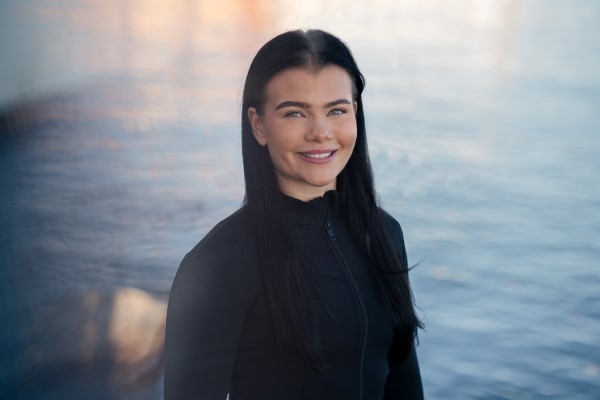
"I wanted to keep my life in Oslo, but I couldn't wait and stay because of that. I went to Stavern, and two days later I was informed that I had been accepted in Oslo. I called my mom, and she asked what my gut feeling said - the answer was simple, I should stay in Stavern," says Anne-Lise, adding:
"Stavern scores well on the environment, teachers, really on everything. It is a beautiful student town. We are the only students here, and if you are out in the town, you always meet someone you know. This makes Stavern a unique place to study.
There are outgoing, friendly, respectful people at the school," explains Anne-Lise.
"I have yet to meet a person I can't talk to."
A Varied Everyday Life
The study life in Stavern is varied, and no days are the same. This is also much of the reason why she both wanted to become a police officer and study at Politihøgskolen.
"I want an active everyday life. I don't want to sit still. The varied everyday life you have as a police officer reflects how an ordinary day at school is. We never know what we are going to face, and you have to go in with an open mind."
Ever since middle school, she had been thinking about becoming a police officer. She recalls thinking it would be difficult, but that didn't stop her from applying when the time came.
"I have always loved people. Being able to make a difference, being there in crisis situations, and helping, is probably what appeals most about becoming a police officer."
Practicing Stepping Into the Police Role
During the first school year, students learn about the police's role in society and the various tasks the police have with prevention, patrolling, and investigation. They do this through lectures, classroom hours, exercises, group assignments, and self-study.
Anne-Lise is looking forward to the different subjects and exercises they will go through. Recently, Anne-Lise got to try a training scenario for the first time. She found taking on the role of a police officer a bit unfamiliar, something several in the class agreed on.
"It is the first time we practice shouting 'Hey, it's the police!'. Those words don't come naturally at first," says Anne-Lise, adding that there was a lot of laughter among the fellow students.
"I am looking forward to more scenario training, and it will become more natural. When we get the uniform on and have more knowledge - especially about the law, it will probably be better."
From the School Bench to the Street
Time flies, but she and her fellow students are already looking forward to next year. Then they will intern and use the knowledge they have gained in the first year.
"Then society doesn't see that I am a student with the two stripes on my shoulders. They see me as a police officer. It will be exciting, but I am also a bit nervous."
What do you dream of doing after you finish?
"It would be insanely cool to be part of IP1, the Emergency Response Unit. It's a long shot, but you should always dream big."
The Emergency Response Unit, callsign "Delta", is the police tactical unit of the Norwegian Police Service. Its members are trained to perform dangerous operations such as high-risk arrests and hostage situations.
Anne-Lise prefers to work operationally at the beginning, but she is also open to trying everything from the emergency unit to investigation.
"Many people think that when you train to become a police officer, all you do is drive a police car, but there is much more to it. There are many opportunities, and you can try many different things throughout your career."
Do you have any tips for those considering applying?
"I sincerely believe that you need to know why you want to become a police officer. You don't become a police officer to get rich, but because you want to make a difference. You have nothing to lose by trying. Put all the schools on the list and don't lock yourself to one place. You also have to believe in yourself. It is important throughout the entire profession," she says, adding:
"Believe in yourself, and you will make it. That was a cliché, haha!"