
The person working as an incident commander has worked for several years in the police and has a lot of experience from operational service. The incident commander must be good at maintaining an overview during missions and making decisions where time and information are often limited. During missions, it is therefore required that the incident commander communicates and collaborates well with others and uses the resources in the mission effectively.
"The most important job of an incident commander is to coordinate the efforts, maintain an overview, and coordinate the further efforts in a mission, and then report it to the operations center. You are out driving a car, like the other regular patrol cars, but have a leadership role in missions where several are involved."
It was primarily her interest in operational work that made her start working as an incident commander. Turid has worked for several years as a regular officer on patrol, interned in different departments, and taken several temporary positions.
"My path was operational experience and the internship program at the incident command section at the tactical department in Romerike."
Always Prepared
A typical workday does not have just one answer. The days usually start the same way by preparing the car for missions. From there, the days can vary.
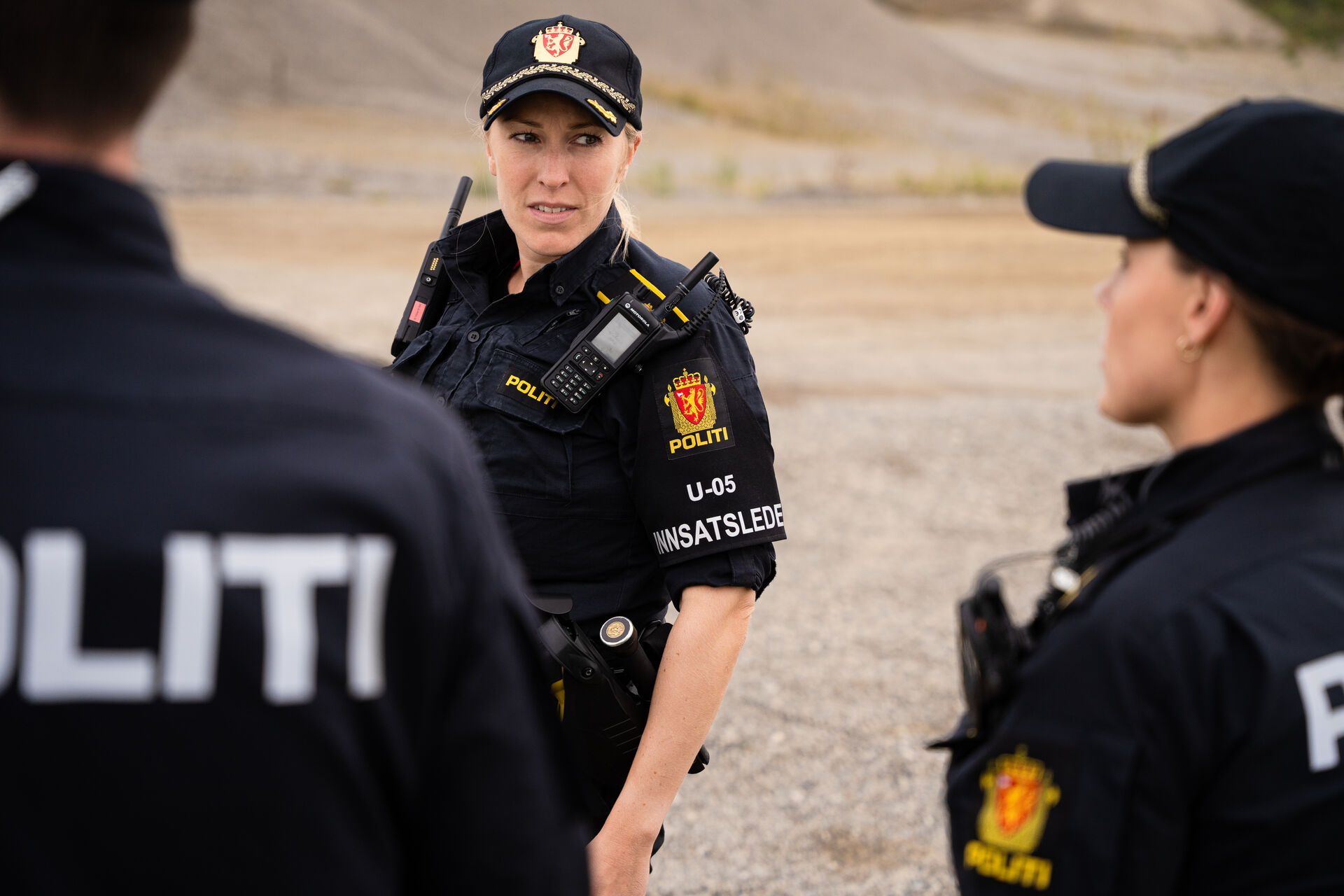
"There can be days where I start by checking emails and drinking coffee before heading out to be on standby. Other times, it's straight out on a mission, and it can be anything from a house fire to a traffic accident, or in the worst case, a murder. Then you have to try to manage the resources as best as possible and be the link to the investigation if it's that type of case."
From Calm to Action in Seconds
The varied workday is one of the things that makes the job so great, explains Turid.
"The best part of my job, and I think many who work operationally would say the same, is the unpredictability and that no two days are the same. There can be quiet shifts, and they can be very quiet, with nothing happening. Then you have the busiest shifts where it's non-stop from start to finish. I think that's one of the best things about the job, and in addition, you really feel like you're making a difference", says Turid and adds:
"It might be a bit typical to say, but this is a very practical profession, so what you do is very visible and it makes a difference."
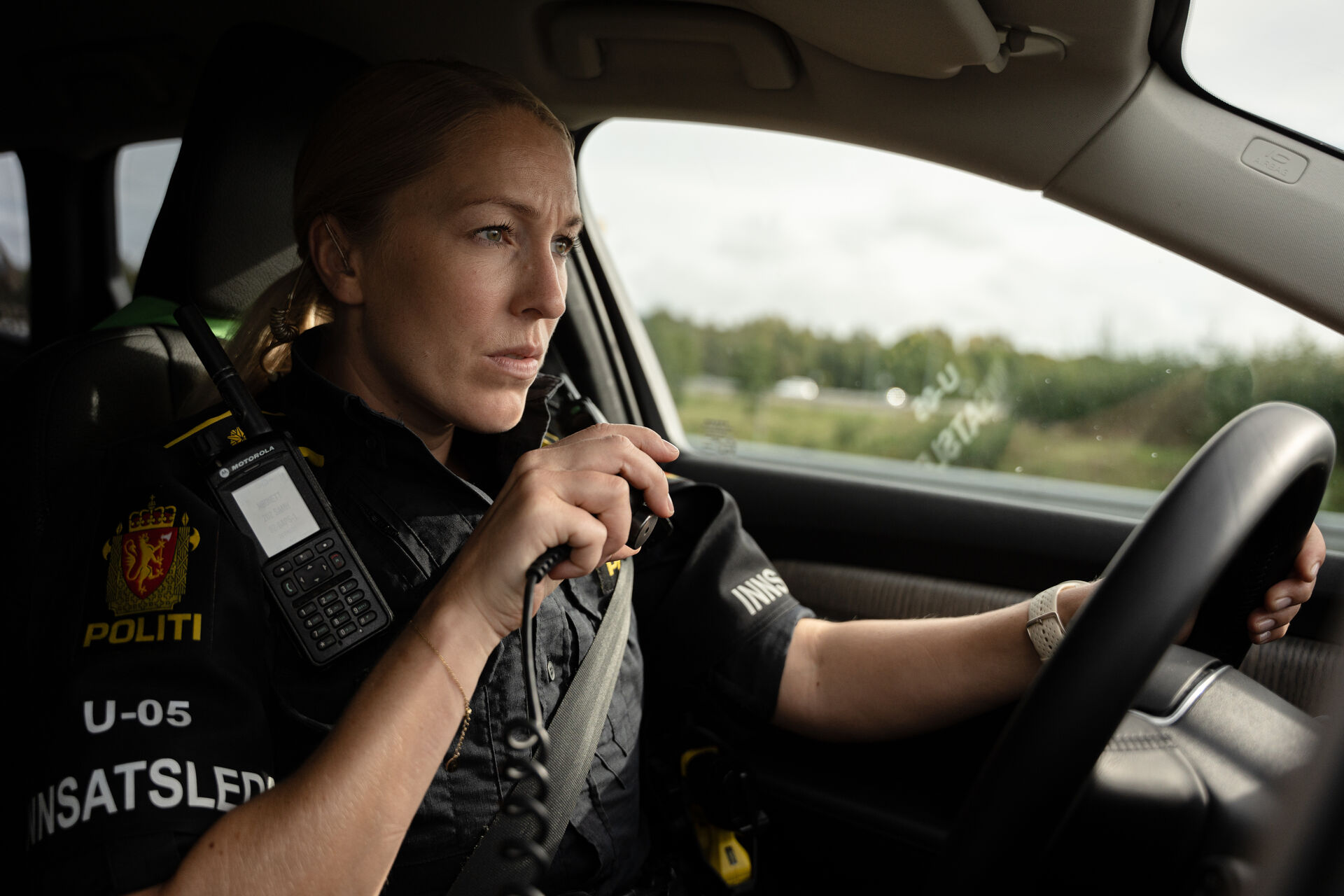
Photo: Didrik Linnerud Arnesen."
"The motivation to work as a police officer is largely about being able to help others. Those are the best shifts, says Turid.
What motivates me is the hope that when I come to work, I will be able to help or be useful. That is actually the most important thing we do as police officers.
Put Bodø in first place
Turid grew up in a small village in Western Norway. When she got to visit the Sogndal police station as a teenager and talked to those who worked there, she was sure that she wanted to become a police officer.
"I wanted to become a police officer because it seemed exciting and like a practical profession. In addition, it was probably the search for excitement that made me want to become a police officer."
Turid attended Politihøgskolen in Bodø. She put the school in first place largely because of where she grew up.
I thought Bodø seemed exciting. Much because it was in Northern Norway and that it was a slightly smaller school. I am very happy with the choice in retrospect. When I talk to others who are applying to Politihøgskolen, I recommend Bodø.
Great Outdoor Ppportunities and Good Student Environment
The environment in Bodø is very close-knit, and she says that you quickly get on a first-name basis with the teachers and know the names of everyone in the class.
"There are great outdoor opportunities and a good student environment. I think the reason I liked studying at the Police Academy so much was that there is a good mix between practical and theoretical subjects. A class or a lecture can be anything from sitting in a lecture hall to practicing arrest techniques."
Turid feels that the time from when she graduated from Politihøgskolen to where she is today has shaped her as a person.
"It was an encounter with a different everyday life, or another side of many lives, that not everyone gets to experience or see. You experience people in crisis, and you experience accidents. You come in and have to clean up when something criminal has happened. It is a job where you both get to feel stress, and you see others' crises, and it does something to you. I think it does something to you in a good way; you feel very useful."
Do you have any tips for those who want to become incident commanders?
"Yes, if I were to give some tips, it would be to gain experience and give it time. All experience is good experience, and life experience also comes in handy. If you get most of your experience from patrol, or perhaps from investigation or prevention, it will be useful. As an incident commander, you need to be able to think holistically. Work and gain work experience, mostly in the operational field. And eventually do something aimed at leadership; that can be wise."