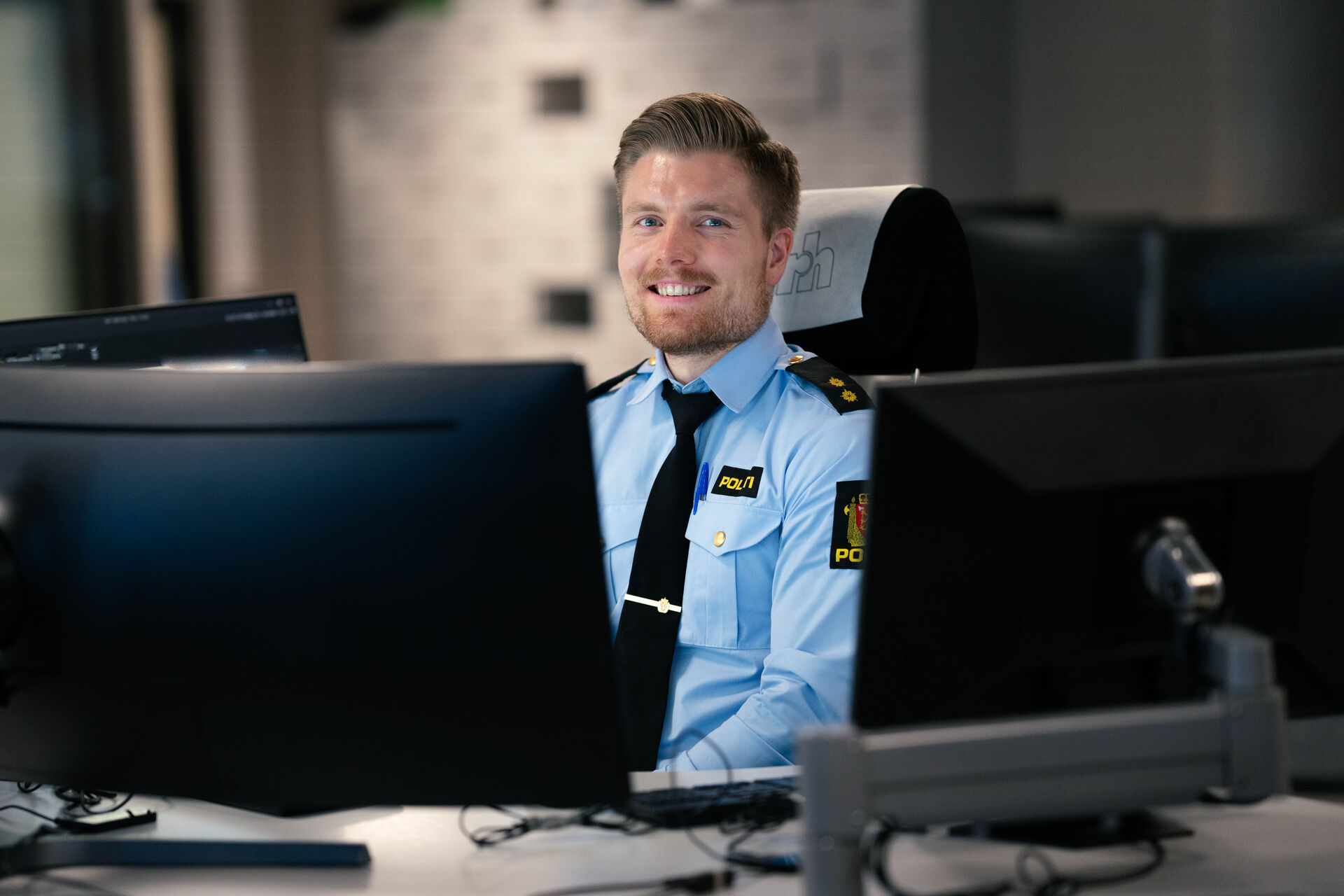
"It is a fantastic workplace where you get to be on the front line of everything that happens in the police. I don't think everyone is aware of the breadth of things people do at the operations centers. We can handle everything from notifying about traffic accidents to, in the next call, talking to a person who no longer wants to live and negotiating with them to accept help from the healthcare system. There is an incredible range in what we do", says Anders.
Those who work at the operations center are directly involved in the police's mission resolution at the operational level. They are the first point of contact when someone needs urgent help. The job is varied and demanding, and you are challenged on every shift, explains Anders.
"We are constantly making decisions, leading, and coordinating missions – which requires a good understanding of the police's roles and tasks. You get to challenge your multitasking abilities and become good at prioritizing tasks."
Helping People in Crisis Situations
The primary tasks of an operator involve answering phones and alarms that come into the police operations center. The inquiries come either on 02800 or the emergency number 112, but also via mobile violence alarms, security companies, and other emergency services. Anders receives the information from the public and patrols and logs the inquiries.
Together with the mission leader and operations leader, they assess what measures the police should implement. It can either be operational measures, such as sending a patrol car, or internal measures that can be resolved from the police side. Other times, there may be a need to refer to other cooperating agencies.
"The best part of the job must be being able to help people on what is often the worst days of their lives. They call for help, and then I make sure they get the help they need. In addition, it is fascinating to see all the mechanisms that are set in motion when someone calls an emergency number. It is very motivating to be a part of it."
Being able to help people with everything from their worst day when they are involved in tragic events or accidents, to helping people who have experienced everyday crime, is something that motivates Anders in his daily work.
The operations center is also part of the rescue service and is subordinate to the Main Rescue Center (HRS) and is a local rescue center (LRS). This means that the police function as the rescue management in missions where HRS decides that we have the leadership responsibility.
"We will then lead and coordinate resources in search and rescue operations, usually rescue operations on land. For example, avalanches, missing persons, accidents on land, and more.
Always Wanted to Work for the Emergency Services
Anders has been fascinated by the police ever since he was little. He has always been drawn to being part of the emergency services and being there to help when things happen, and feeling like he is part of something bigger.
When he was going to study at Politihøgskolen, he ended up in Bodø, which he describes as an unparalleled experience.
"What makes Bodø special is that the students represent so many different places in the country, who move there, and then you get a unique study environment. Campus Bodø is part of Nord University, so you can also expand the student environment to more than just police students. In addition, you have many great outdoor opportunities and access to cultural offerings such as cinema and concerts."
The Path to Becoming an Operator
The path to the job as an operator was an internship position, followed by a permanent position in the Southeast Police District. To become an operator, you must go through an operator course. This is something that is offered if you get the position. The course lasts 2-3 weeks, depending on which district you belong to.
"In the course, you get training in the police systems, how to receive messages, and how to handle various situations as an operator.Relevant experience is very useful when applying for a job as an operator", says Anders.
This can be experience from, for example, investigations. In addition, you should be able to guide and help the patrols get started with immediate investigations on the spot.
Must Like Handling Many Things at Once
"It also helps to have experience in order maintenance because then you can think about what kind of questions you should be able to answer to give the patrols the best assistance so that they can solve the mission in the best possible way," says Anders, adding:
"To work as an operator, you should enjoy working in a high-paced work environment. At times, there can be an awful lot of phone calls and missions going on simultaneously, so you should have the ability to handle multiple tasks at once and prioritize. You must also be accommodating and understand the situations of those who call. You should be good at collaborating since you work closely with your colleagues and other emergency services. It is also an advantage to make decisions with very little information."
Anders thinks it is important to emphasize that much of this can be learned along the way; "you don't have to be a superhuman who can handle or know everything at once. Together with your colleagues, you make up the product that the operations center delivers. You collaborate a lot with your colleagues and become a close-knit group that can solve most things."
Do you have any tips for those who want to work as an operator?
"Just go for it, no matter how old or young you are. This is a place where you can expect to be challenged and have the opportunity to build a further career. You are challenged as a person, almost daily, and you never know what is hiding behind the next phone call. You must be prepared for the unexpected," says Anders, adding:
"When I was younger, I thought that if I had to call the police, I would be met by a person who is professional and knows the answer to everything. I want us who work at the operations center to be able to fulfill that and be a safe person for those who need help."