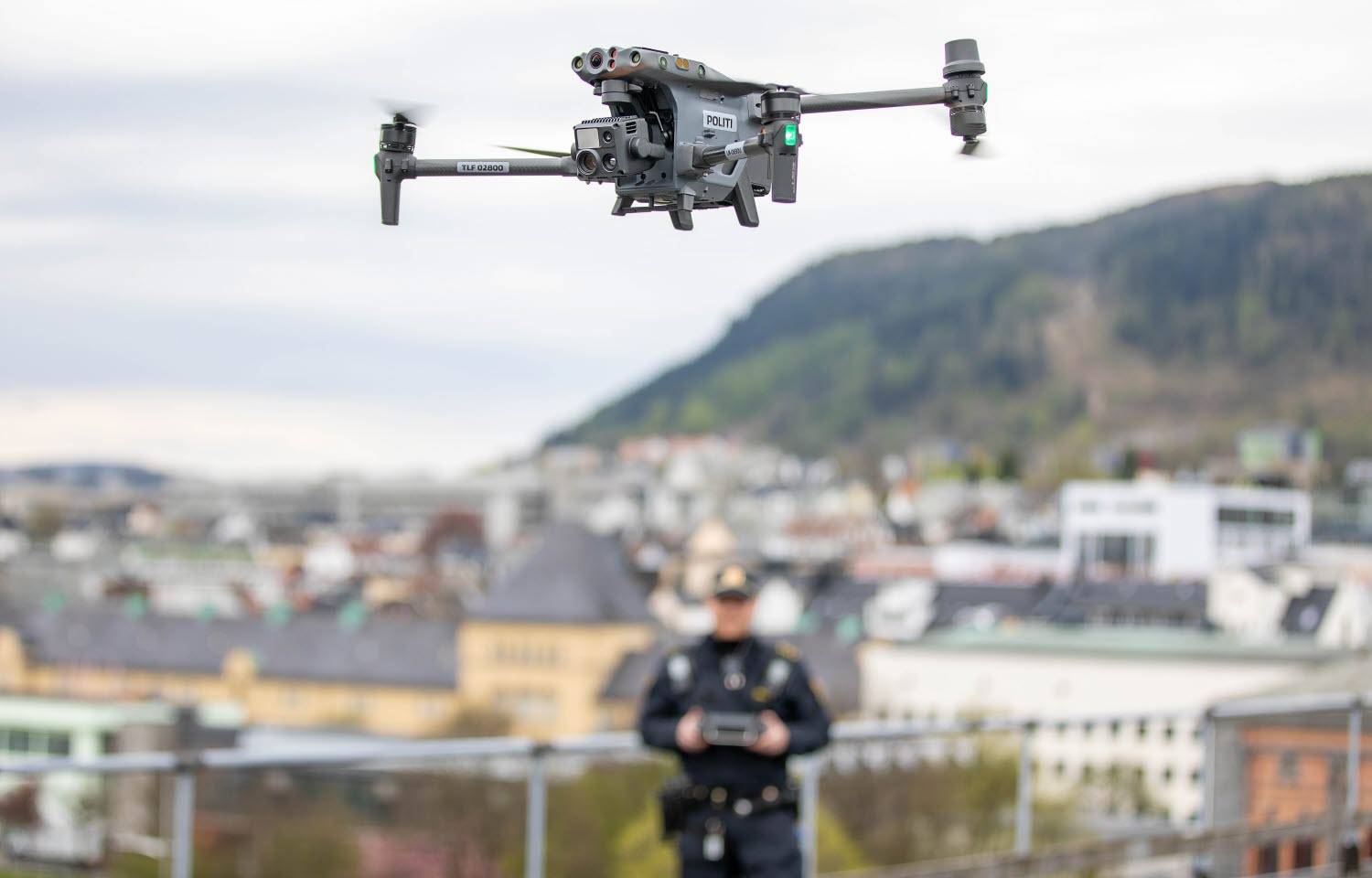
There is a buzzing in the air. The sound gets louder, then softer, then louder again. Is it the sound of a swarm of grasshoppers?
"Before drones came, it might have felt like there was a higher threshold to get helicopter services to assist. They have to cover the whole country, so you had to be lucky if they could take on a mission. Now, with drones, we can handle more of the missions ourselves", says police officer and drone pilot Daniel.
"For police districts that are far from the police helicopter base, drones can be an extra useful aerial capacity with shorter response times than helicopter assistance for missions like landslides, floods, or search and rescue", said Justice Minister Emilie Mehl in a press release in 2022.
From Toys to Useful Tools
Drones have developed very quickly. From being toys to becoming very useful tools for the police, in search and rescue, fire services, and more.
In 2018, it was decided that drones would be tested in three police districts. It quickly became clear that drones could be a useful tool for fulfilling the public mission in many different types of assignments. Today, all police districts have drone pilots.
Daniel has worked as a drone pilot since 2022. Before becoming a drone pilot, he worked for a period at the courthouse, in investigation, and on patrol. It was quite by chance that he chose to become a drone pilot.
"We received an email that it was possible to take a drone course and a description of what it would entail. It seemed exciting. The use of drones as a work tool in the police is very new. It's fun to have such a new role in the police, learn new working methods, and follow the development up close. There is a big difference from when we first started using drones until now. Today, it is in high demand, and we receive many requests."
Daniel says he chose to become a police officer because he wanted an unpredictable everyday life and to help people in difficult situations.
"I also wanted to work with the sides of society that you don't see much of. People might have an image of what the police profession entails, but the reality is a bit different. But the job has lived up to expectations", he says.
Gaining an overview in demanding situations
"It is very exciting to be involved in such a wide variety of mission types. This is not the case in regular patrol duty."
Many of the missions involve search and rescue. Then they often collaborate with other agencies in Oslo, such as the dog service and the marine service. Drones can also be an effective tool for the police when they need to get an overview of demanding or unclear situations. An example of this can be large events.
"The last event we participated in was the Pride parade. Then we are usually several drone pilots who collaborate to cover different aspects of the event."
What do you think is the best part of being a police officer?
"For me, it's having an unpredictable everyday life. You never quite know what you're going to face. I have many great colleagues to rely on, and I always feel confident that we will solve the tasks and challenges we encounter. It's also very fun to collaborate with other agencies. I'm always impressed when we have complex missions and see the systems that are put into action to solve them, and how well it actually works."
Do you have any tips for those who want to become police officers?
"It might be wise to talk to someone who is a police officer. Gather a lot of information about the profession before you decide. It's a quite different workday than you might initially think, but it's a very good job."
And if someone wants to become a drone pilot in the police?
"You don't need any prior knowledge or experience with drones, but it probably helps to have an interest in the technical aspects and the developments happening in the field. You need to be able to keep up with the developments and be interested in finding new ways and techniques to use."